
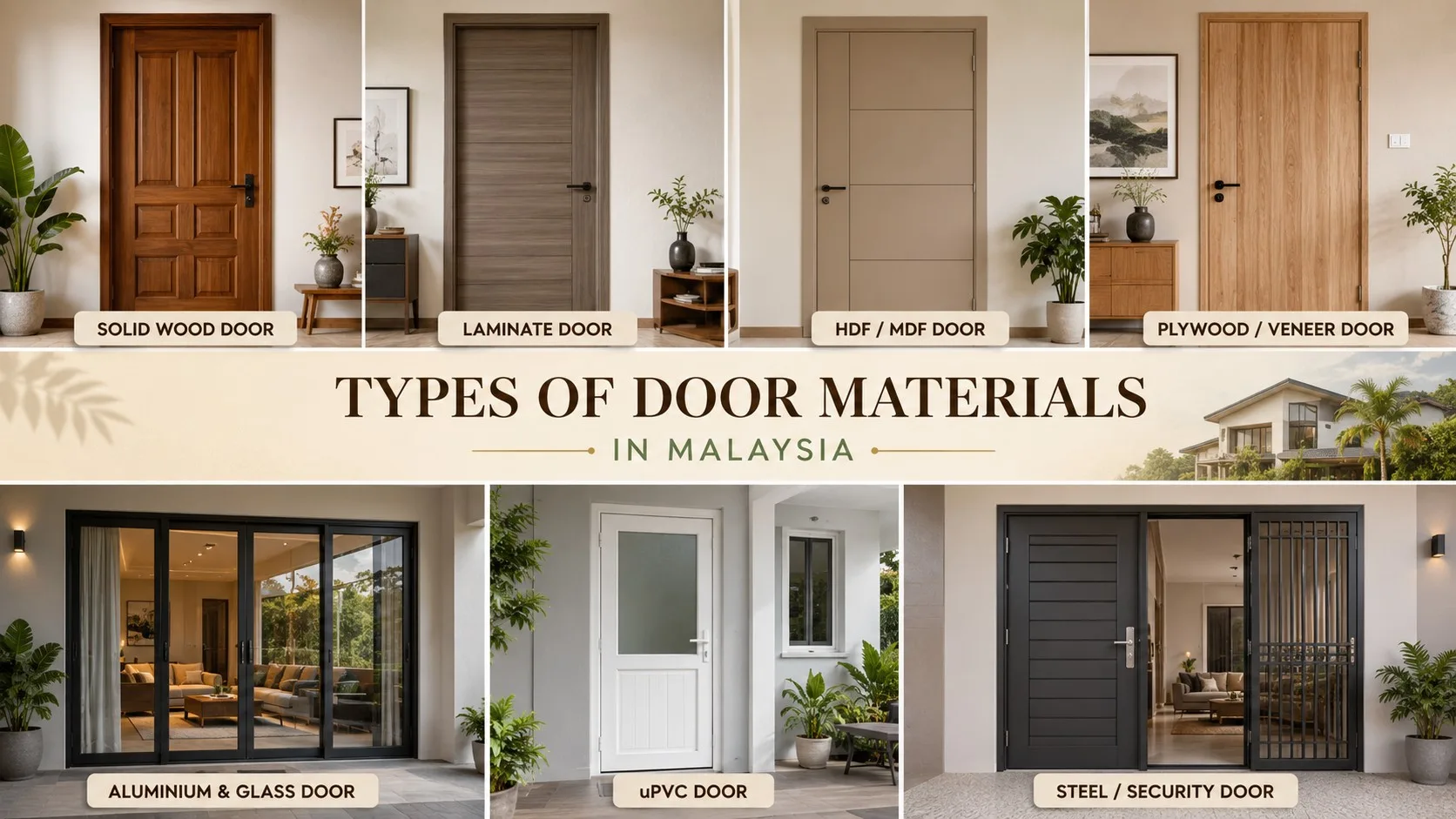
Choosing the right door material is more important than most homeowners realize, especially in Malaysia’s hot and humid climate. The wrong material can lead to swelling, warping, termite damage, and costly replacements.
If you’re planning to install or upgrade your doors, here’s a complete guide to the best door materials in Malaysia, along with those that truly perform in Malaysian weather.
Why Door Material Matters in Malaysia
Malaysia’s environment presents unique challenges:
- High humidity levels year-round
- Frequent exposure to moisture in Malaysia’s construction site condition
- Increased risk of termite infestation
Because of this, not all door materials perform equally. Selecting the right one ensures long-term durability and better value.
Common Types of Door Materials in Malaysia
In Malaysia, selecting the right door material is essential due to the country’s humid climate and exposure to moisture and termites. Each material serves a different function and comes with its own texture, advantages, price and limitations.
Plywood Doors
Plywood doors are made of thin layers of wood veneers glued together in a cross-grain pattern. The orthogonal layering provides high structured strength and prevents warping. However, there are many grades and qualities of plywood. Therefore, quality of doors highly dependent on its grades.
HDF (High Density Fibreboard) Doors
Doors made of HDF are engineered using finely compressed wood fibers under immense heat and pressure. Typically stronger than usual MDF Doors, smooth surface ideal for painted finish but not water resistant. Prolonged exposure to moisture can cost the doors to swell & delaminate
HMR (High Moisture Resistant) Doors
Improve upon standard fibreboard by offering better resistance to moisture. The material has a dense, smooth texture similar to MDF, but with added moisture resistance. HMR doors are suitable for general indoor use.Although HMR door are made for water-resistant, it may still swell or warp when exposed to prolonged humidity.
HDMR (High Density Moisture Resistant) Doors
Rtree offers an advanced moisture water resistant board for doors. The feature is a compact structure with a refined and consistent texture suitable for various finishes. Designed specifically for high-humidity environments, HDMR boards offer superior moisture resistance, reducing the risk of swelling and deformation. With enhanced durability, lower maintenance requirements, and greater long-term stability, HDMR boards offer a more reliable solution than traditional materials like HMR and HDF boards, especially for homes and spaces exposed to moisture.
Overall, while each material has its place depending on budget and application, modern solutions like HDMR board are increasingly preferred for their ability to withstand Malaysia’s challenging climate while maintaining performance and appearance over time.
Comparison: Which Door Material Performs Best?
Material | Water Resistance | Durability | Termite Risk | Suitability for Malaysia |
Plywood | Depends on quality | Depends | Yes | Depends |
HDF | Low | Depends on usage | Yes | Depends on usage |
HMR | Moderate | Moderate | Moderate | Moderate |
HDMR (Rtree) | High (V313 Standard) | High | Low | Excellent |
Why You Should Upgrade to HDMR Board for Door
Many homeowners and contractors start by considering HDMR board due to their higher water resistance. HDMR stands out because it offers:
- Stronger resistance to moisture damage
- Better long-term structural integrity
- Reduced risk of swelling and warping
- Designed specifically for Malaysian conditions
- 100-hour swelling test
- Termite & fungus resistance
Conclusion
While many door materials are available in Malaysia, not all are built for long-term performance with water resistance. If you’re looking for:
- Higher water resistance
- Higher durability
- Long-term value
- Termite & fungus resistance
Then upgrading from HMR or HDF to HDMR board is the smarter choice. Contact us now to know more about our product. We are No 1 water-resistant boards supplier in Malaysia.